Citizen Congress Watch and Asian Civil Society Partners Launch the First “Asian Parliament Openness Index”
發布日期 2026.11.05
Citizen Congress Watch and Asian Civil Society Partners Launch the First “Asian Parliament Openness Index”
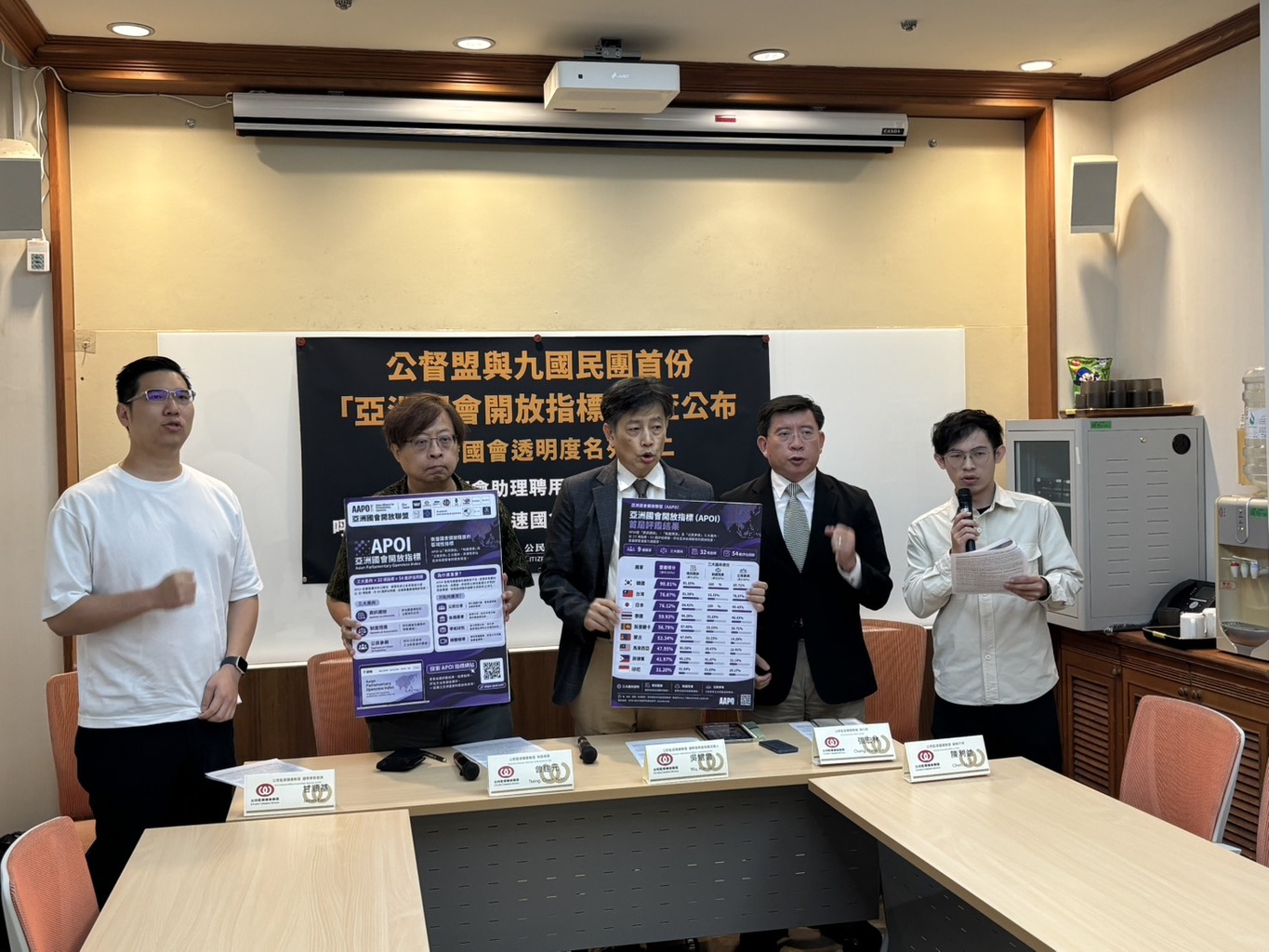
New Regional Assessment Highlights Accountability Gaps and Calls for Stronger Parliamentary Reform
CCW Urges Cross-Party Action in Taiwan and Continued Democratic Cooperation Across Asia
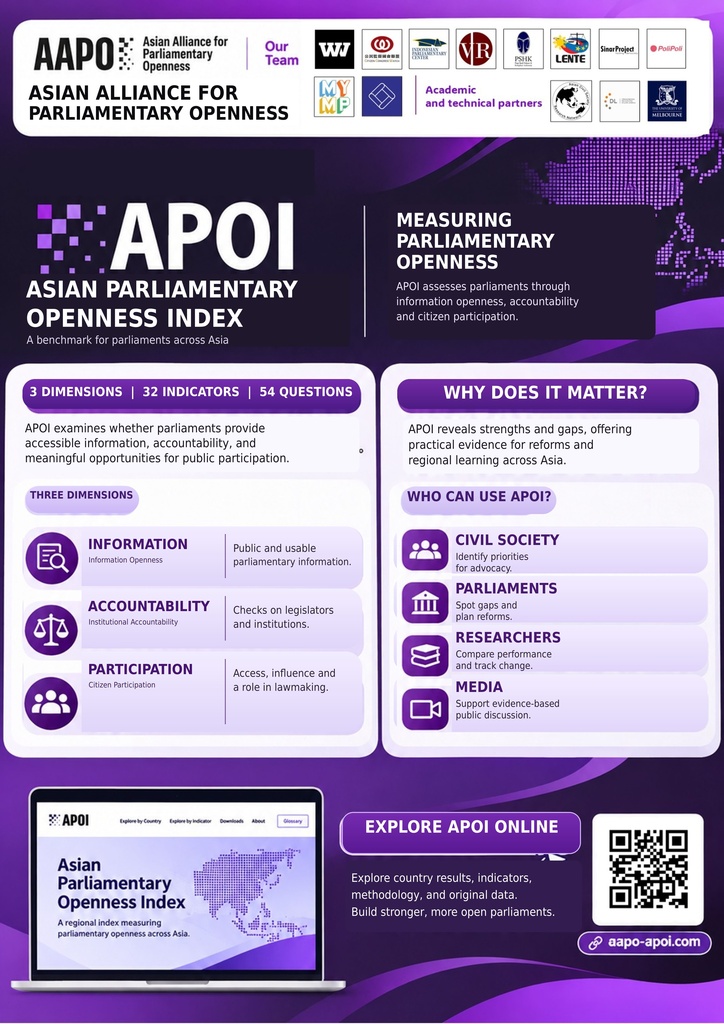
Citizen Congress Watch (CCW) and its Asian civil society partners have launched the first Asian Parliamentary Openness Index (APOI), marking an important milestone in regional cooperation on parliamentary transparency and democratic accountability.
Developed through nearly three years of consultations beginning in 2023, the inaugural index was presented at the Parliament of Thailand on October 26, 2026. The conference was jointly organized by the Asian Alliance for Parliamentary Openness (AAPO), relevant committees of Thailand's Senate and House of Representatives, and King Prajadhipok's Institute. Taiwanese legislator Ngalim Tiunn participated virtually, sharing Taiwan's experience in parliamentary reform.
At a press conference in Taiwan on November 5, CCW presented the assessment findings and highlighted areas requiring further reform. The APOI evaluates nine Asian parliaments across three dimensions—information openness, institutional accountability, and citizen participation—using 32 indicators and 54 assessment questions.
Taiwan received an overall score of 76.67%, placing second among the nine parliaments assessed. However, it scored only 33.33% in institutional accountability, while the indicator on the registration of legislators' interests received zero points.
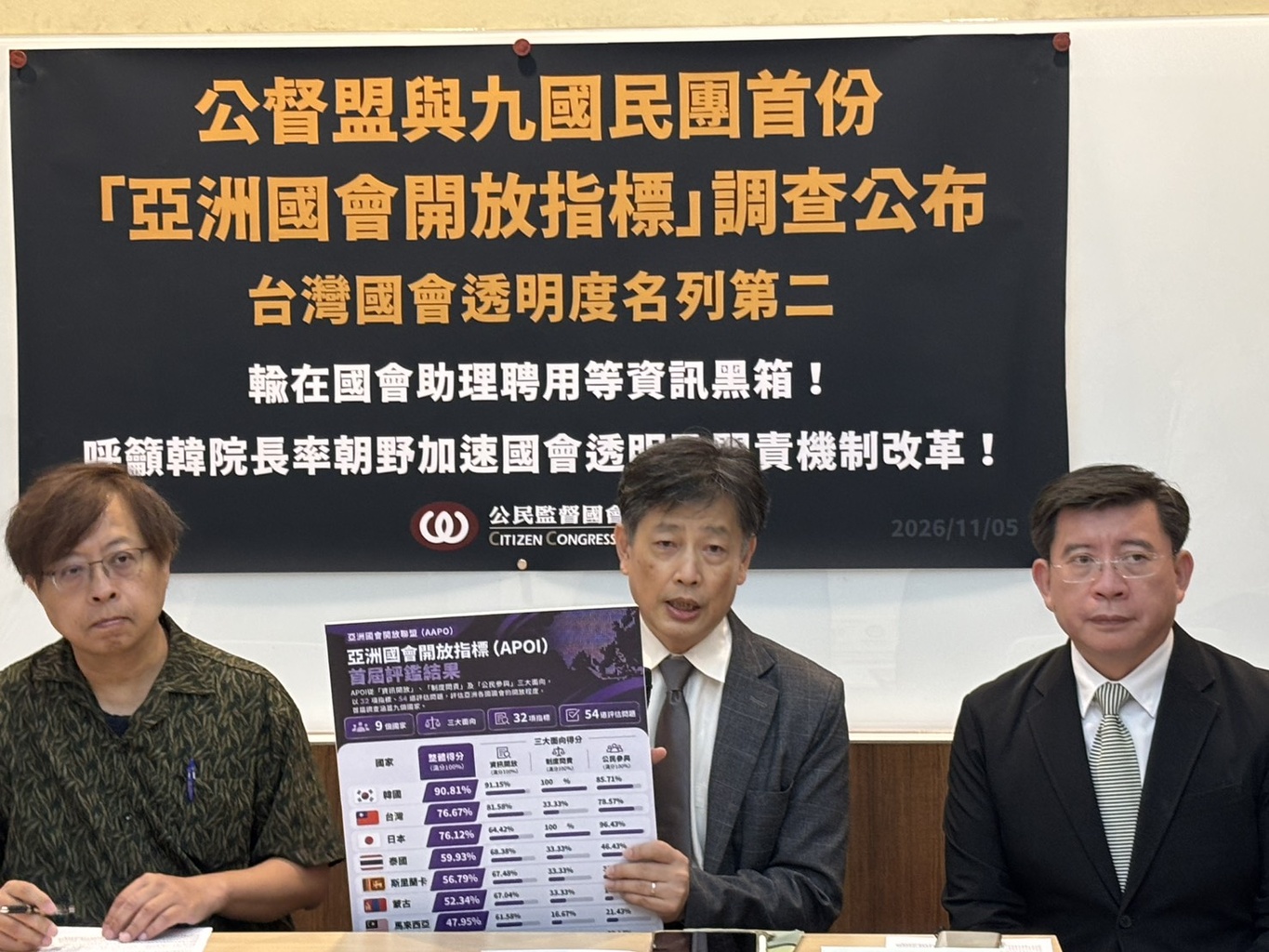
Wu, Kun-Lu, Convenor of CCW's International Affairs Committee, emphasized that the index is intended not simply to compare rankings, but to identify institutional weaknesses and encourage sustained reform. He urged Taiwan's Legislative Yuan to address shortcomings in transparency, accountability, and public participation.
Strengthening Democratic Resilience Through Regional Cooperation
Amid authoritarian expansion, democratic backsliding, political polarization, and the spread of AI-generated misinformation and disinformation, parliamentary transparency and civic oversight have become increasingly important.
Chang, Hung-Lin, Chief Executive Officer of CCW, emphasized that parliaments are central to democratic representation and national sovereignty. The APOI represents a major step forward for Asian civil society by establishing a common framework that examines not only whether parliamentary information is disclosed, but also whether citizens can scrutinize decisions, hold legislators accountable, and participate in lawmaking.
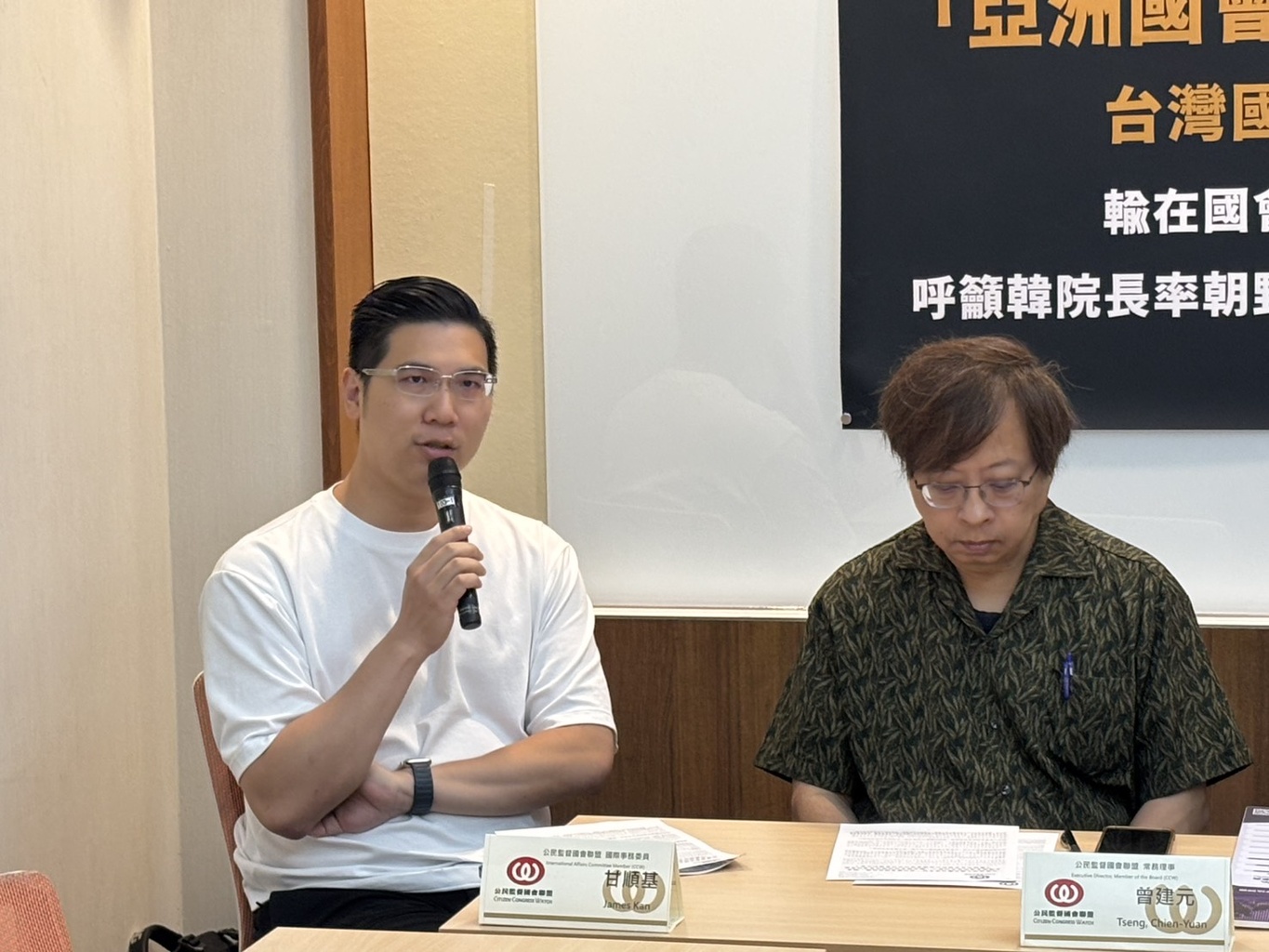
James Kan, International Affairs Committee Member, highlighted the significance of launching the index at the Parliament of Thailand despite the political pressures surrounding Taiwan's international participation. He stressed that regional cooperation allows countries to learn from one another and turn commitments to parliamentary openness into measurable institutional progress.
Beyond Livestreaming: Six Areas Requiring Reform
Tseng, Chien-Yuan, International Affairs Committee Member, acknowledged Taiwan's progress in parliamentary transparency, including parliamentary broadcasting and the Open Parliament Action Plan. Nevertheless, he cautioned that democratic progress is not irreversible and that effective accountability mechanisms remain essential.
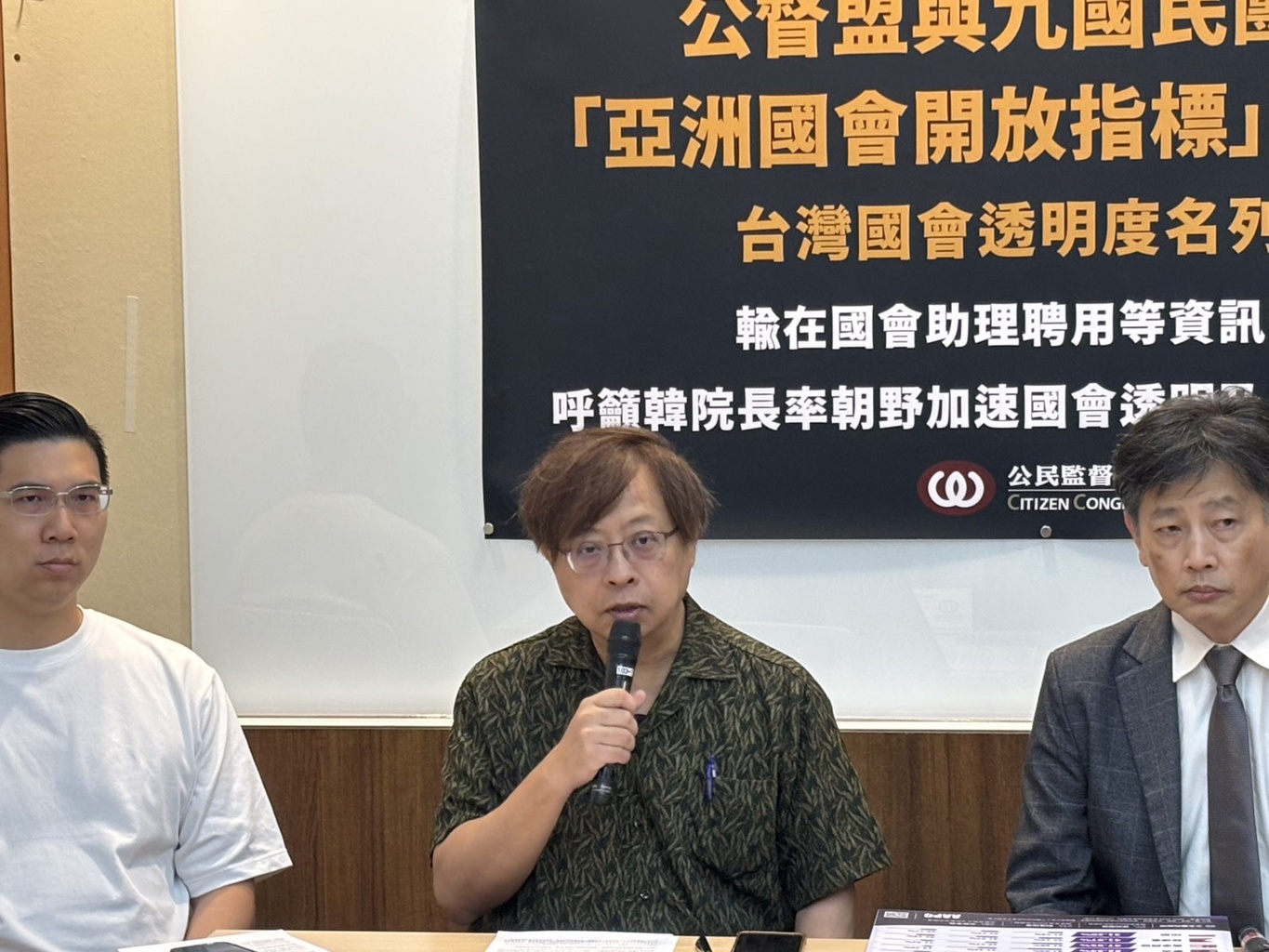
James Kan further stressed that livestreaming alone does not guarantee meaningful transparency. Citizens must also be able to access legislative records, examine legislators' interests, and participate in the decision-making process.
Based on the APOI findings and its long-standing monitoring experience, CCW identified six institutional gaps requiring reform:
- Disclosure of legislators' interests: Establish a comprehensive, regularly updated public register of outside positions, potential conflicts of interest, and relevant lobbying information.
- Transparency of legislative staff and public expenditure: Improve disclosure of publicly funded staff arrangements and office expenditure while protecting employment rights and personal information.
- Parliamentary ethics and accountability: Strengthen legislative conduct rules, disciplinary procedures, and transparent handling of misconduct.
- Transparency of legislative decision-making: Ensure timely public access to amendments, bill versions, budget proposals, and cross-party negotiation outcomes.
- Open parliamentary data: Standardize committee records, improve publication timeliness, and expand machine-readable information and API access.
- Citizen participation: Establish stronger public consultation and feedback mechanisms while improving parliamentary accessibility and observation facilities.
CCW emphasized that parliamentary openness must go beyond livestreaming. Citizens should be able to access information, trace legislative decisions, and effectively hold elected representatives accountable.
CCW Calls on Legislative Speaker to Lead Reform
Chang, Hung-Lin called on Legislative Yuan Speaker Han Kuo-yu to demonstrate leadership and convene parliamentary caucuses to address longstanding institutional weaknesses. He urged the Legislative Yuan to adopt concrete reform proposals and implementation timelines before the current legislative term ends.
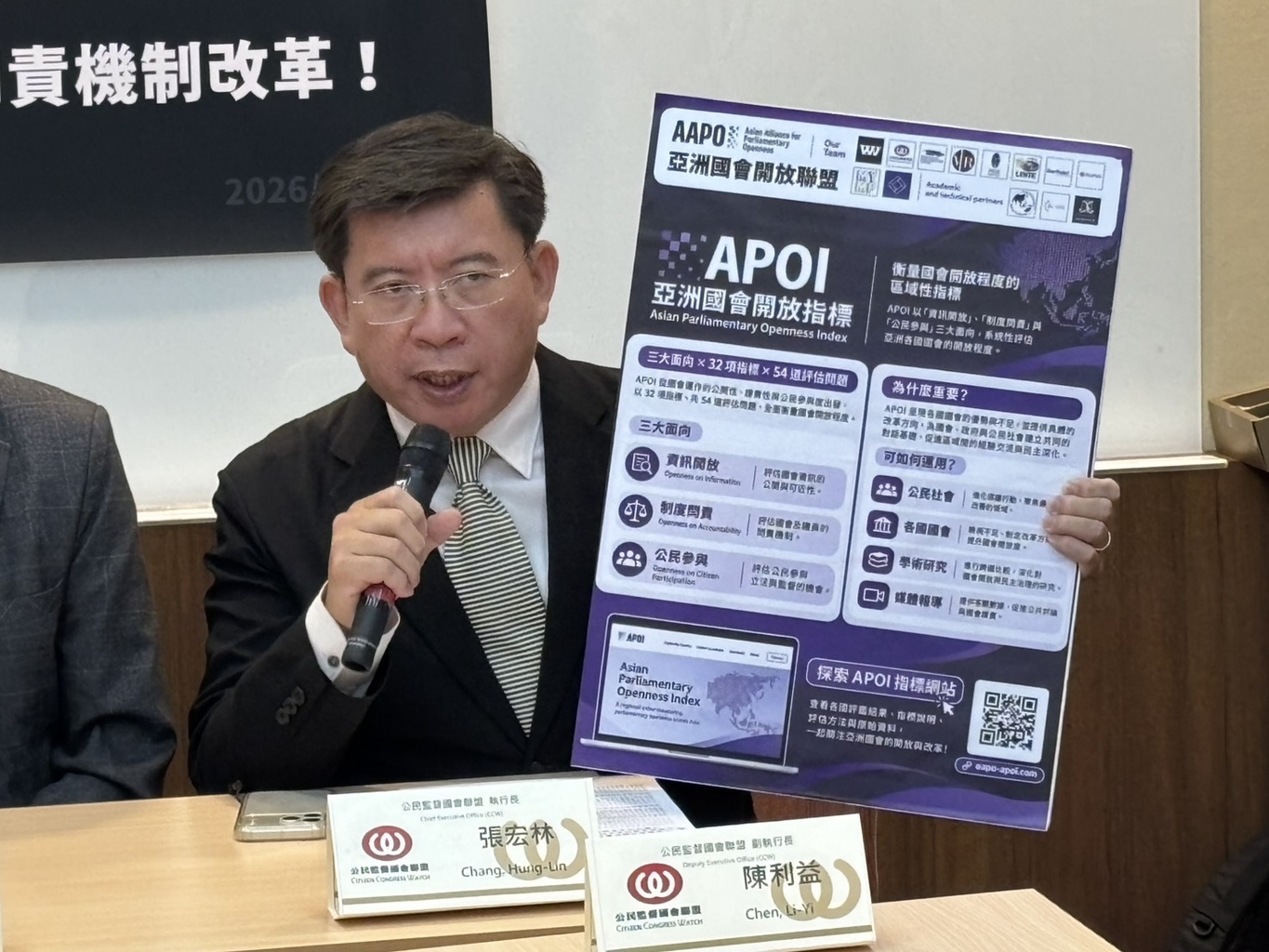
Chen, Li-Yi, Deputy Executive Director of CCW, stressed that many parliamentary reform issues have remained unresolved for years. He called for stronger interest disclosures, improved legislative staff and lobbying regulations, greater transparency in legislative records, and meaningful opportunities for citizen participation.
CCW urged the Legislative Yuan to translate transparency commitments into concrete institutional changes that can be publicly monitored and evaluated.
AAPO to Continue Monitoring Parliamentary Reform
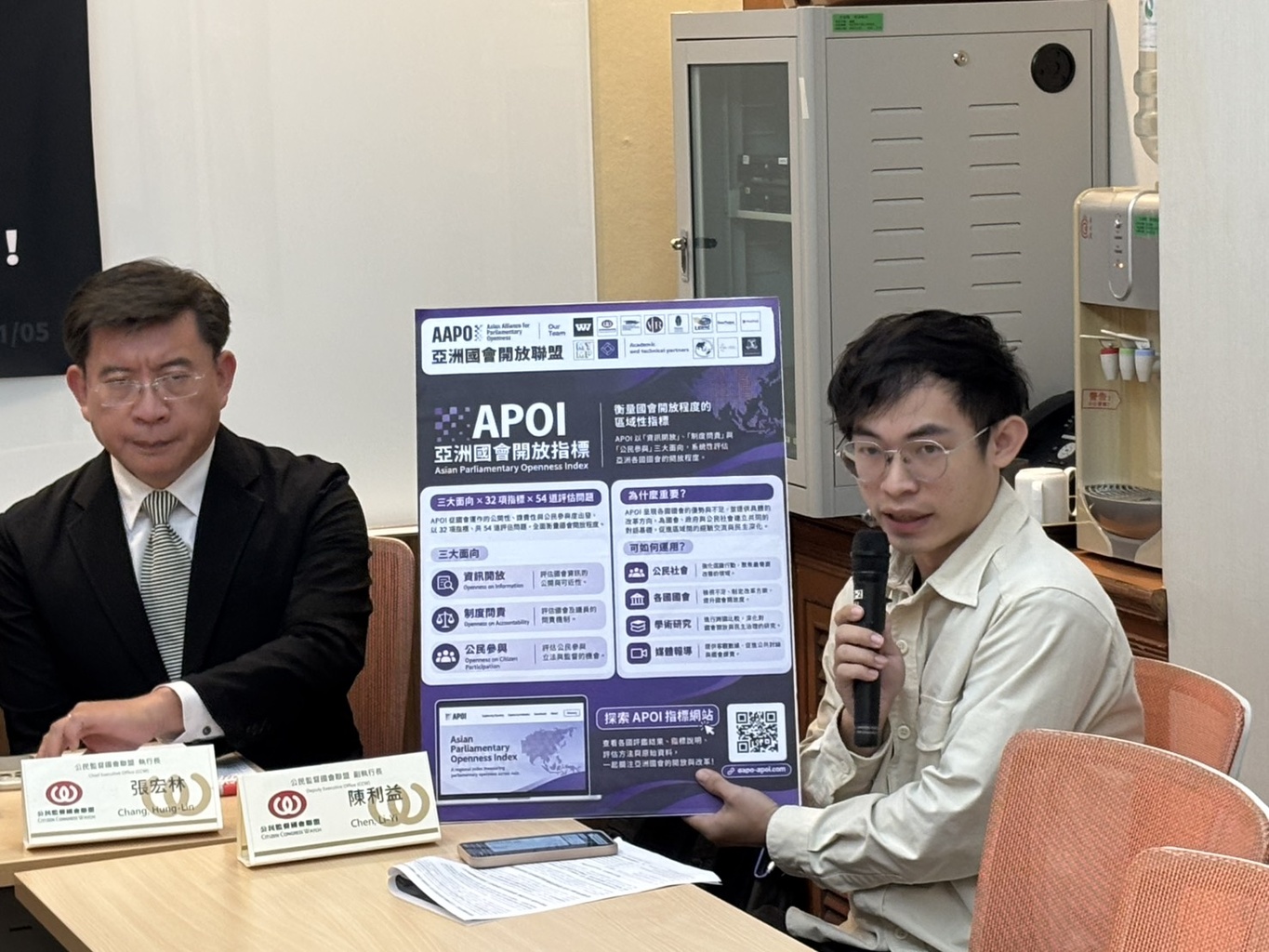
The Asian Alliance for Parliamentary Openness (AAPO) brings together more than ten civil society organizations from across Asia, with CCW serving as a core member. The initiative has drawn on parliamentary transparency experiences from Latin America and academic input involving researchers associated with the University of Melbourne and Professor Lin Chiung-chu of National Chung Cheng University.
Wu, Kun-Lu emphasized that the inaugural APOI is only the beginning. CCW and its regional partners aim to update the assessment every two years, regularly review its methodology, and expand exchanges among Asian parliaments, scholars, and civil society organizations.
Through sustained cooperation, AAPO seeks to strengthen parliamentary transparency, accountability, and democratic resilience throughout Asia.
Parliamentary openness must be more than a political promise—it must become a measurable and lasting democratic practice.
────────────────────────────────
We warmly welcome media coverage and encourage journalists to share this press release.
|
Date:Thursday, November 5, 2026 Time: 9:30–10:00 AM (Taipel Time, UTC+8) Venue: Conference Room 103, Zhongxing Building, Legislative Yuan Address: No. 3-1, Section 1, Jinan Road, Zhongzheng District, Taipei City, Taiwan 09:30–09:35 Opening Remarks, Introduction to APOI and Guests 09:35–09:40 Presentation of APOI Assessment Results 09:45–09:55 Reform Recommendations and Guest Commentary 09:55–10:00 Media Q&A
November 5 Press Conference Livestream (Recording):
|
Speakers and Participants:
|
